
How to Get Around Bangkok: Public Transport Explained (Without the Stress)
Bangkok is one of the world’s most exciting cities and one of the most intimidating when it comes to getting around. Traffic is legendary, distances are deceptive, and at first glance the transport options can feel overwhelming. The good news? Bangkok actually has one of the most efficient public transport systems in Southeast Asia if you know how to use it. After spending extended time in the city and building our Bangkok Cheat Sheet, this guide brings everything together in one place. Think of it as the real-world explanation behind the cheat sheet: when to use what, what to avoid, and how locals and experienced travelers actually move around the city.
The Big Picture: How Transport Really Works in Bangkok
There is no single “best” way to get around Bangkok. The city works on a layered system: Elevated trains above traffic, Underground subways below it, River boats bypassing it entirely, Taxis and ride-hailing filling the gaps. The key is choosing the right tool for the moment, not committing to one method all day.
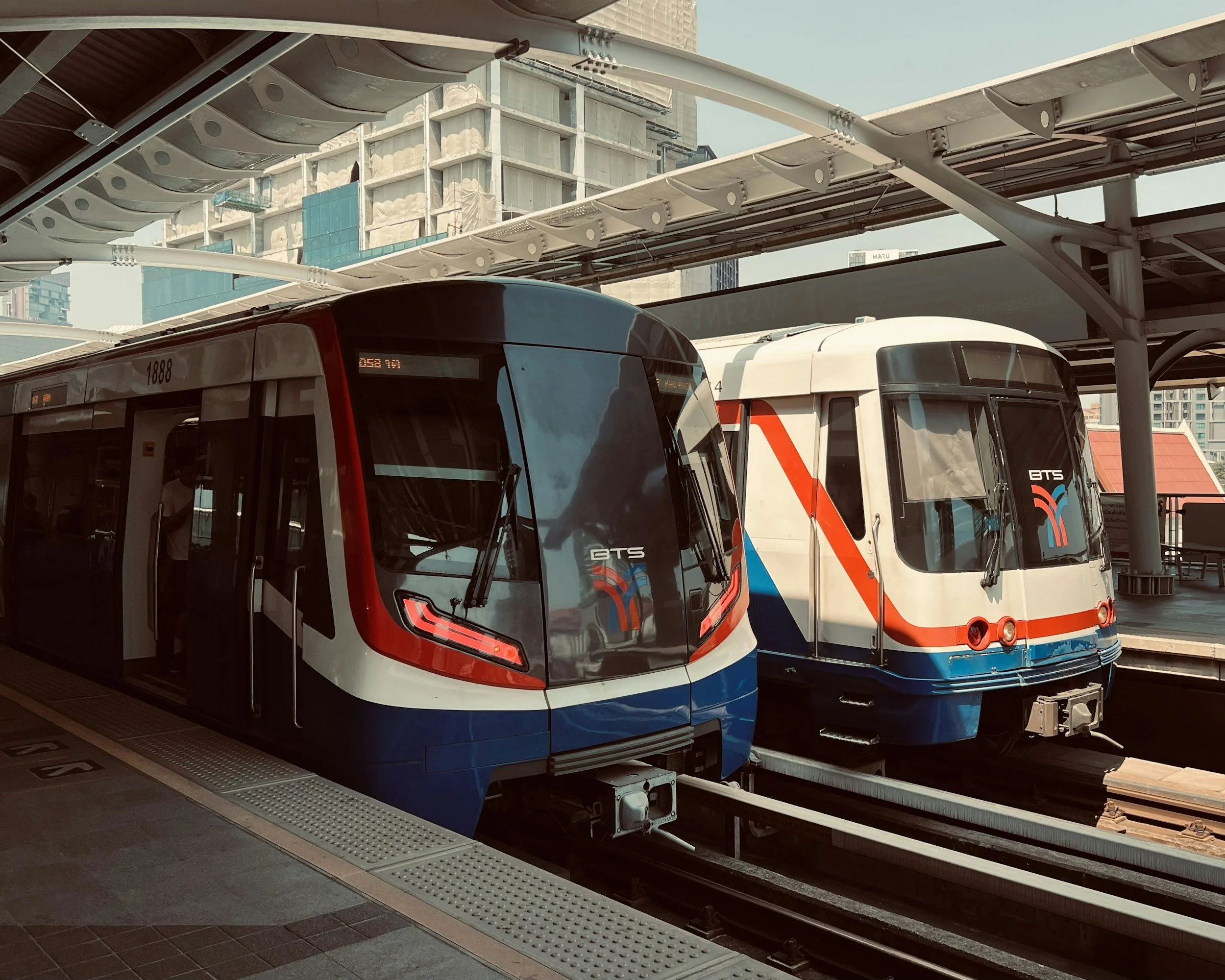
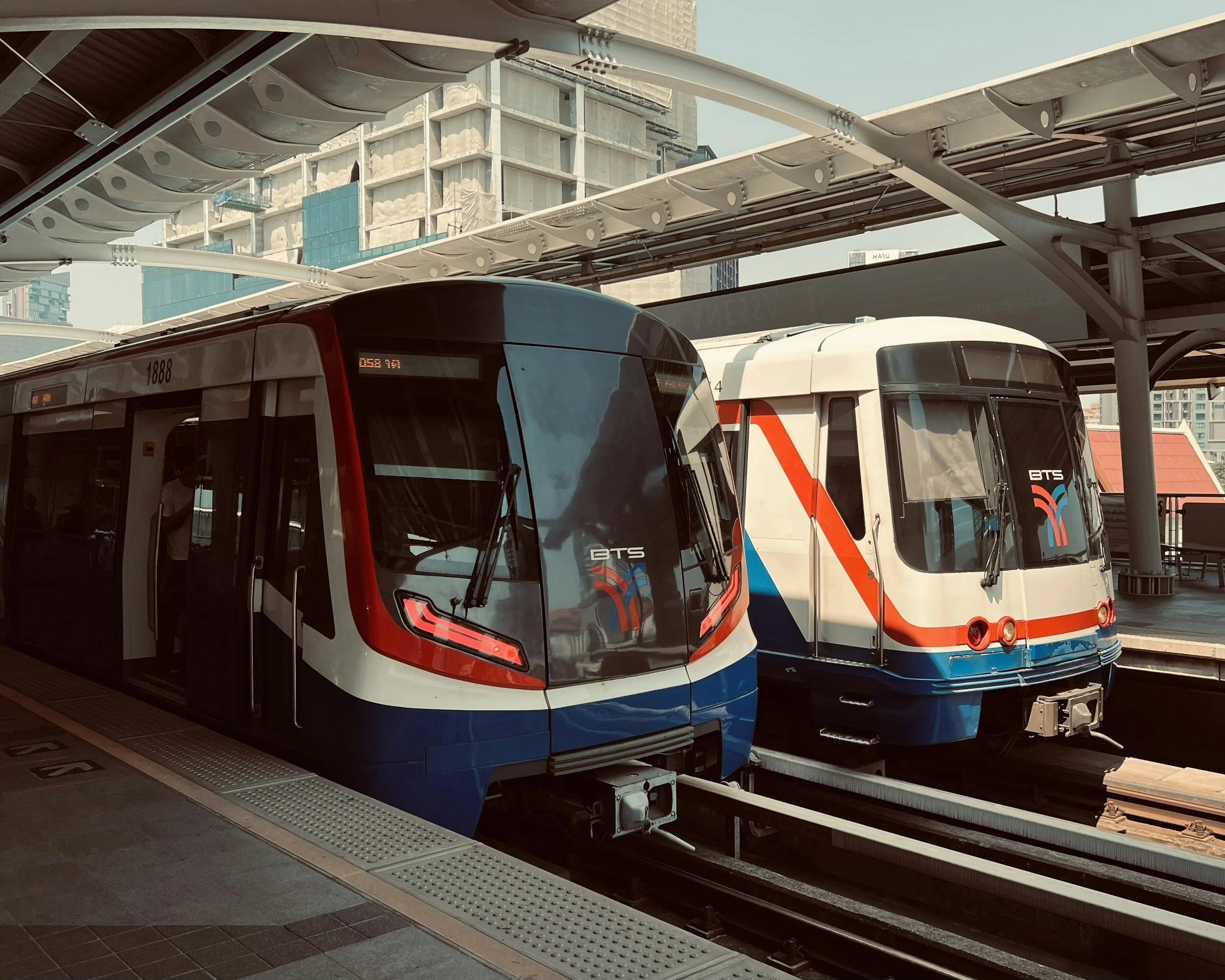
BTS Skytrain: The Backbone for Visitors
If you’re new to Bangkok, the BTS Skytrain will quickly become your best friend.
It’s fast, air-conditioned, clean, and easy to understand. Most areas first-time travelers stay in Sukhumvit, Siam, Silom, Victory Monument are directly connected by BTS. We recommend using BTS when: You’re traveling during rush hour, You want predictable travel times, You’re moving between shopping, dining, and nightlife districts. The two main lines (Sukhumvit and Silom) intersect at Siam, making transfers simple. Trains run frequently from early morning until midnight, and fares are inexpensive.
Reality tip:
BTS stations are well signed in English, and announcements are bilingual. Even if you don’t know Bangkok well, you’ll feel comfortable here.
Where to buy tickets:
At BTS stations: Purchase single-journey tickets from vending machines or counters (cash accepted).
Day pass:
Available at BTS counters and ideal if you plan multiple rides in one day. More information about BTS Skytrain >
Rabbit Card (stored-value):
Convenient for frequent travel; can be topped up at stations and partner locations.
Contactless payments:
Some stations accept contactless bank cards and mobile wallets, though coverage is still expanding.
Helpful app:
BTS Skytrain App > (The Skytrain – official): Good for route maps, station info, fare estimates, and service updates.
Use Google Maps for full journey planning and live navigation. Tickets are simple to buy on the spot, and the BTS app is a useful reference especially for first-time visitors navigating central Bangkok.
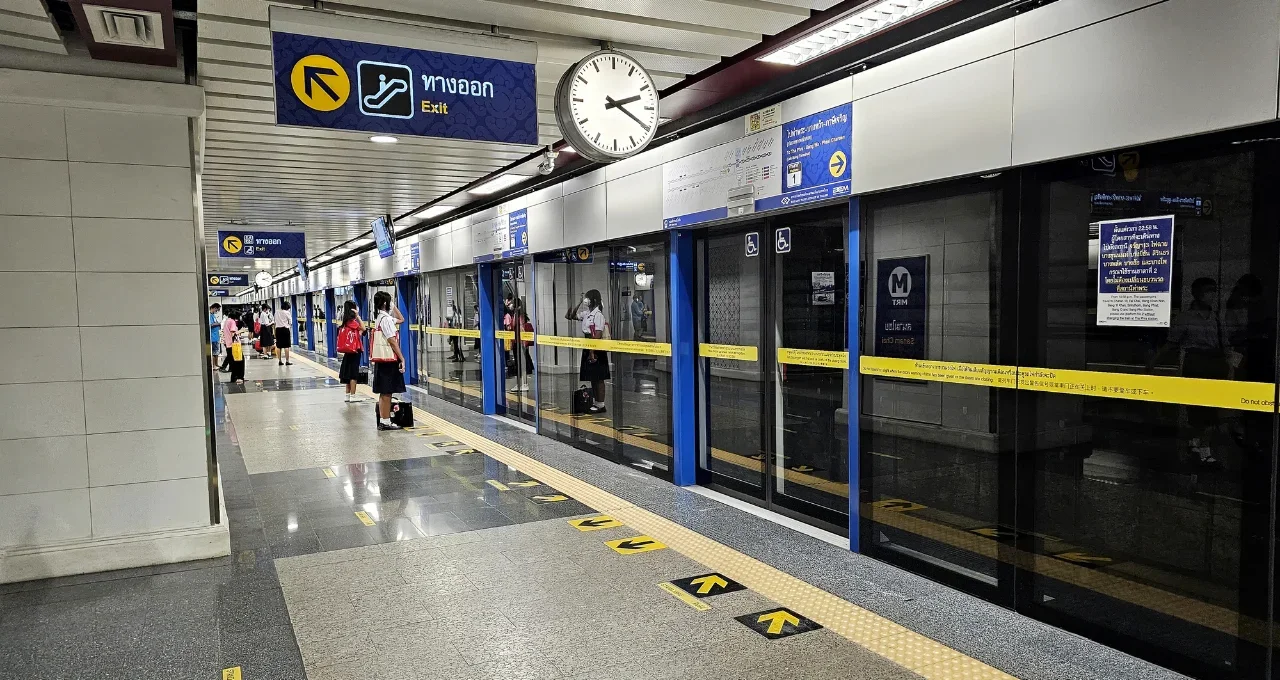
MRT Subway: Quiet, Efficient, and Underrated
The MRT is Bangkok’s underground system and complements the BTS beautifully.
While tourists sometimes overlook it, we use the MRT constantly especially for: Chinatown, Chatuchak Weekend Market, Old Town access (via Sanam Chai station), BTS - MRT interchanges. The Blue Line is the most relevant for visitors. The newer Yellow and Pink lines mainly serve suburban areas and are rarely needed for short-term stays.
Where to buy tickets:
At MRT stations:
Use ticket machines or counters to buy single-journey tokens (cash or card accepted at most stations). Stored-value cards: The MRT card is convenient for frequent use and can be topped up at stations.
Contactless payments:
Some lines accept contactless bank cards and mobile wallets availability varies by station.
Helpful app:
Bangkok MRT App (official) > Useful for route maps, station info, fare estimates, and service updates.
Google Maps is still best for door-to-door planning, but the MRT app works well as a reference. Tickets are easy to buy on arrival, and the MRT app is a helpful companion especially if you use the subway often.
Why we like MRT:
Stations are spacious, less crowded than BTS during peak times, and excellent in rainy season.
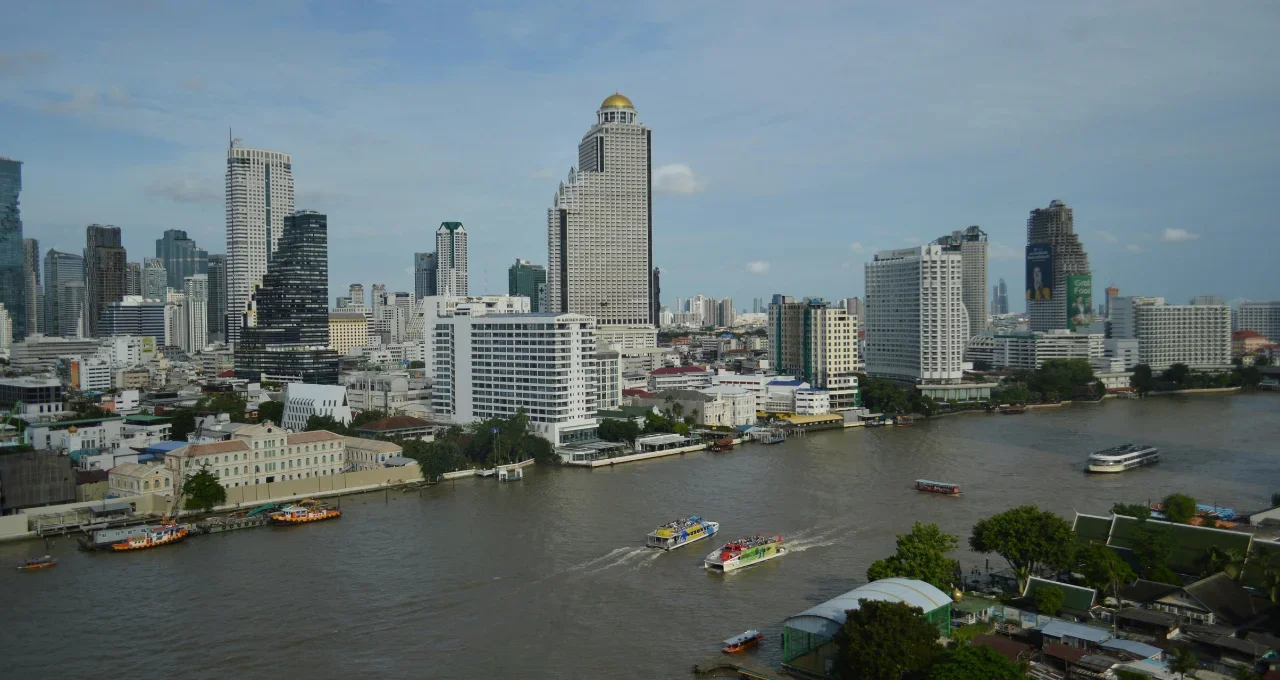
Chao Phraya Express Boats: Transport That’s Also an Experience
Bangkok’s river boats are more than scenic, they’re one of the most efficient and enjoyable ways to move through the city’s historic heart.
While roads around Old Town can be congested, the river offers a smooth, predictable alternative with views you simply don’t get elsewhere. The boats run along the Chao Phraya River, connecting major cultural and historic areas and making them especially useful for sightseeing days: The Grand Palace & Wat Phra Kaew, Wat Pho, Wat Arun (via short ferry crossing), Old Town & riverside neighborhoods
For first-time visitors, starting at Sathorn Pier > (connected to BTS Saphan Taksin) is the simplest option. From there, the Orange Flag boats cover all major stops. How it works (in practice) Tickets are inexpensive and bought at the pier or onboard (cash only in most cases)
Boats run frequently during the day. Stops are announced in English. No reservations required
The experience itself is part of the appeal: passing temples, old wooden houses, modern hotels, and local river life in one continuous journey. It’s one of the rare cases where public transport doubles as sightseeing, and even travelers short on time usually enjoy at least one river ride.
When it’s best to use:
Visiting Old Town temples. Combining sightseeing with transport. Avoiding traffic during busy daytime hours. Seeing a different side of Bangkok beyond streets and malls
What to know before you go:
Best used during daylight hours. Keep small cash ready. Watch your step when boarding and exiting. Sit toward the back for a smoother ride
Our take:
If you do only one non-train transport experience in Bangkok, make it the river boats. They’re practical, affordable, and uniquely Bangkok—and they add a layer of atmosphere no taxi or train can match.
This is one of the few cities where public transport doubles as sightseeing, and we always recommend at least one river journey.
🟣 More information about Chao Phraya Express Boats & river routes >
Taxis & Ride-Hailing: Convenient, With Caveats
Taxis and ride-hailing apps like Grab and Bolt are everywhere in Bangkok and play an important role in filling the gaps between public transport lines. They’re ideal when: Public transport isn’t nearby. You’re traveling late at night (after BTS/MRT close). You have luggage or shopping bags. You want direct, door-to-door convenience. That said, traffic can completely change travel times. A trip that looks like 10 minutes on the map can easily take 40 minutes during peak hours or heavy rain.
Our rule of thumb:
Use taxis for short distances or during off-hours. Use Grab/Bolt when you want upfront pricing and GPS routing. Avoid taxis during rush hour (7- 9 AM, 4:30 - 7:30 PM) if you’re in a hurry
Important tips:
Always insist on the meter in regular taxis. Expect toll roads on longer trips (paid separately). Grab/Bolt pickups are clearer for first-time visitors and reduce language barriers. During rain or peak hours, availability drops and prices may rise. Taxis and ride-hailing are convenient and affordable in Bangkok, but they work best when used strategically, combined with BTS, MRT, and river boats rather than as your main mode of transport.
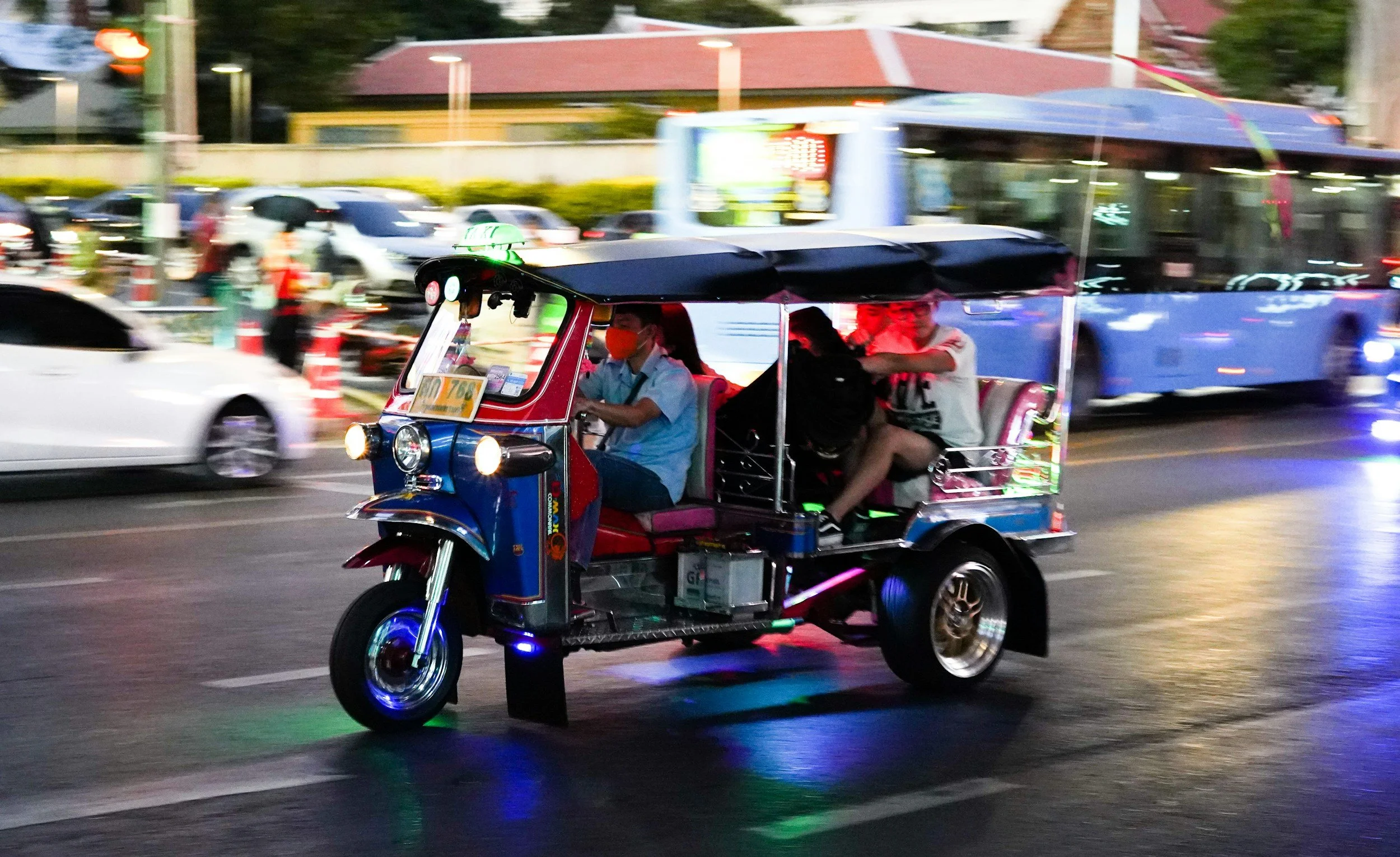
Tuk-Tuks: An Experience, Not a System
Tuk-tuks are one of Bangkok’s most recognizable icons, but they function more as a cultural experience than a practical transport system.
They are best used for: Very short distances, a one-time novelty ride, evening trips when traffic is lighter, photos and atmosphere rather than efficiency. How it works: Tuk-tuks do not use meters. Always agree on the price before getting in. Prices are usually higher than taxis for the same distance Typical cost: Short rides usually range from ฿60–150, depending on distance, time of day, and negotiation skills
Where you’ll find them:
Around Old Town landmarks (Grand Palace, Wat Pho, Wat Arun). Near markets and night markets. Popular tourist areas such as Chinatown and Khao San Road. Outside major BTS/MRT stations in busy districts
Important cautions:
Avoid offers that include shopping stops, “special temples,” or unusually cheap rides. Decline any unsolicited tour suggestions. If something feels rushed or pushy, walk away, another tuk-tuk will appear quickly
Our take:
Tuk-tuks are fun, loud, and uniquely Bangkok—but they are not efficient. Use them once for the experience, then rely on BTS, MRT, river boats, or taxis for daily movement. Ride a tuk-tuk because you want the experience, not because it’s the fastest way to get somewhere.
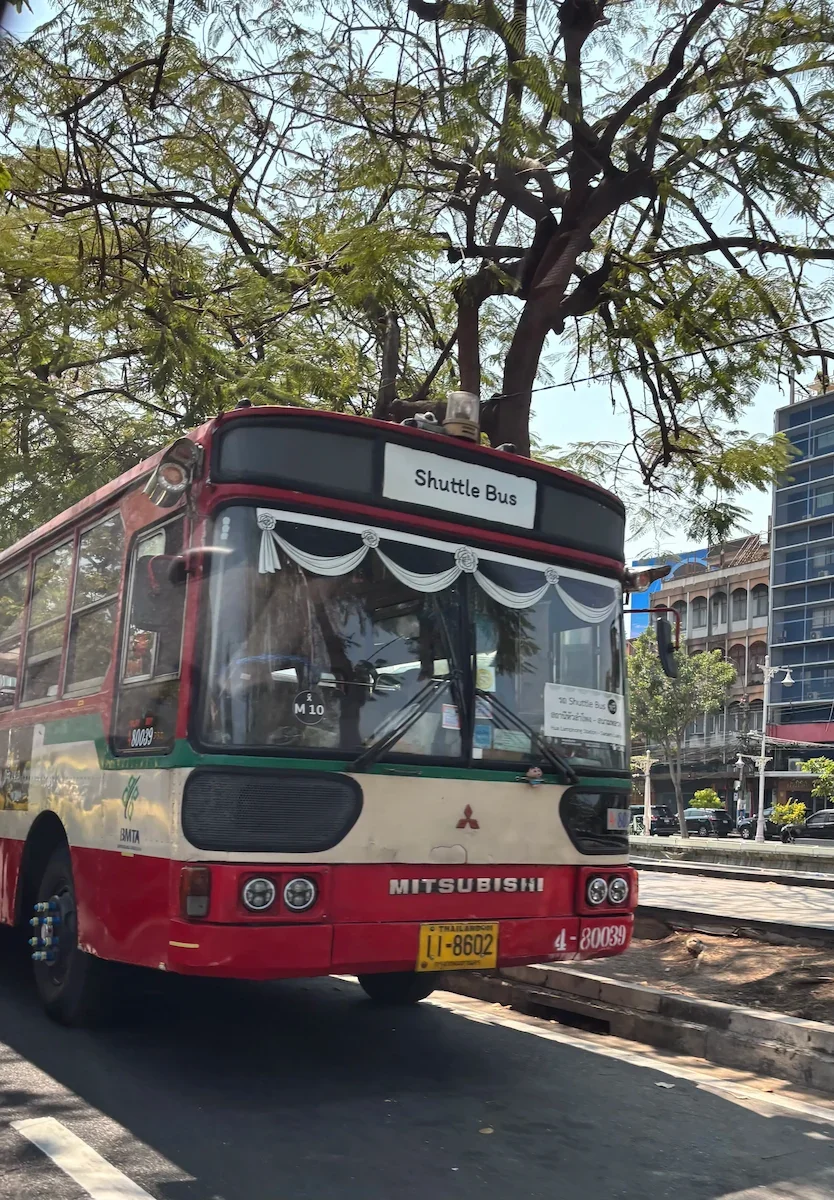
Buses: Cheap, Extensive, but Not Beginner-Friendly
Bangkok’s bus network is enormous and incredibly affordable.
You can cross large parts of the city for just a few baht, and locals rely on buses every day. On paper, it’s one of the cheapest ways to get around. In reality, buses can be challenging for first-time visitors. Routes are complex, stops aren’t always clearly marked, and announcements are usually in Thai only. Timetables are flexible at best, and traffic can dramatically change travel times—what looks like a 20-minute ride on the map can easily turn into an hour during peak hours. Even with Google Maps, it’s easy to miss your stop or end up on the wrong bus, especially if you’re unfamiliar with Bangkok’s neighborhoods or street layout.
When buses do make sense:
You’re staying long-term and want the cheapest option. You’re traveling short distances outside BTS/MRT coverage. You’re comfortable navigating local transport systems. You don’t mind slower travel times
When to skip buses:
You’ve just arrived in Bangkok. You’re carrying luggage. You’re short on time. You want a stress-free experience. For most visitors, BTS Skytrain, MRT, river boats, or taxis are simply easier, faster, and far less confusing—especially in your first days in the city. Buses can be a great option later on, once you’re settled and confident, but they’re rarely the best place to start.
If you decide to use buses in Bangkok, ViaBus > is the one app that makes the system far less intimidating. ViaBus was built specifically for Thailand’s public transport and is widely used by locals and expats. It shows bus routes, live locations, nearby stops, and estimated arrival times, all in one place.
Helpful Apps We Actually Use
A few tools make Bangkok transport much easier:
- Google Maps – essential for routing and real-time decisions
- BTS Skytrain App – official reference for BTS routes and fares
- Bangkok MRT App – useful for MRT stations and service info
- Grab / Bolt – reliable ride-hailing
We treat these as support tools, not must-haves—but they help reduce friction.
How We Personally Move Around Bangkok
If we had to summarize our approach:
- BTS + MRT for most daytime travel
- River boats for Old Town and sightseeing
- Grab or taxis at night or for short hops
- Walking more than you’d expect (especially in compact neighborhoods) We don’t try to optimize every journey—we choose what feels calm and predictable.
FAQ — Bangkok Public Transport
-
The BTS Skytrain and MRT Subway are the most convenient public transport options for visitors — they’re fast, air-conditioned, and cover most major areas. For riverside sightseeing, river boats are often the most scenic and efficient.
-
Yes. BTS, MRT, and river boats operate on different networks, and each uses its own ticketing system. Some stations have integrated fare cards, but it’s still easiest to purchase tickets separately when you board.
-
Grab can be convenient for door-to-door trips, especially late at night or with luggage, but it’s typically more expensive than BTS/MRT or river boats for most city trips.
-
Bangkok buses are affordable but less tourist-friendly due to complex routes and limited English signage. They’re best used by experienced travelers or when other options aren’t available.
-
Yes. The Airport Rail Link connects Suvarnabhumi Airport to central Bangkok (Phaya Thai station), where you can transfer to the BTS. Don Mueang Airport can be reached by bus or taxi; there’s no direct rail link yet. More information about Airport transfer >
-
Yes. The Chao Phraya River boats are an excellent way to visit historic temples like Wat Pho, Wat Arun, and the Grand Palace area. They are inexpensive, reliable, and part of the experience.
-
Both are modern rail systems, but they are run by different operators and have separate maps and fare structures. BTS covers mainly the Sukhumvit and Silom corridors, while MRT connects central nodes and intersects with BTS at key stations.
Explore Bangkok by Travel Style

Plan Your Trip to
Bangkok With Minerave Travel
Plan your Bangkok trip effortlessly using Minerave Travel.
🟣 Compare hotels, flights, experiences, and essential travel services in one place >
Final Advice: Don’t Overthink It
Bangkok’s transport system looks complex on paper, but in practice it’s flexible and forgiving. You don’t need to master everything on day one. Start with BTS and MRT. Within a few days, the city will feel far more navigable than expected.
That’s exactly why we built the
🟣 Bangkok Cheat Sheet > to give you confidence first, and depth when you want it.

