
Bangkok Chinatown (Yaowarat): A Complete Visitor Guide (2026)
Few neighborhoods in Bangkok are as electric, historic, and atmospheric as Chinatown (Yaowarat). By day, it’s a maze of gold shops, herbal medicine stores, and market stalls. By night, it transforms into one of the most vibrant street food districts in Southeast Asia. Located near the Chao Phraya River in Bangkok’s Old Town area, Chinatown blends Chinese-Thai heritage, traditional temples, neon-lit streets, and some of the city’s most famous food stalls. Whether you visit for culture, photography, or food, Chinatown is an essential Bangkok experience.
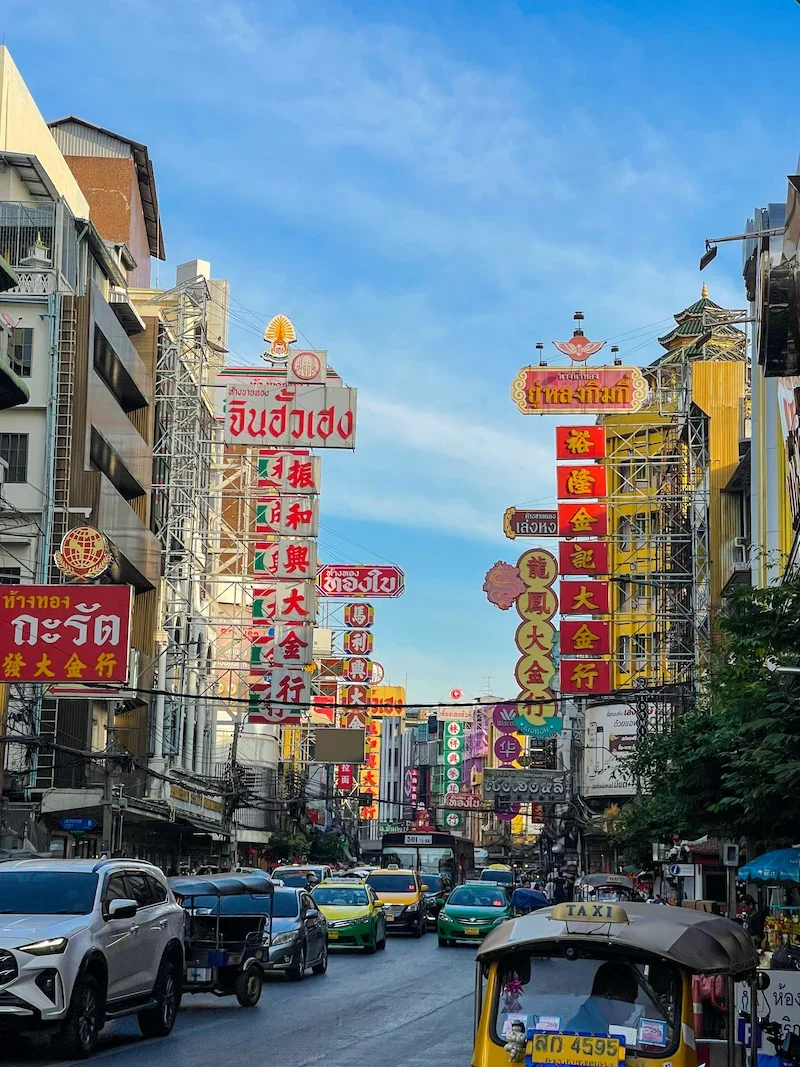
Why Bangkok Chinatown
Bangkok’s Chinatown dates back to 1782, when Chinese merchants were relocated to the Yaowarat area during the founding of the Rattanakosin Kingdom.Today, it remains:
- One of the oldest commercial districts in Bangkok
- A center of Chinese-Thai culture
- A major gold trading hub
- A world-renowned street food destination.
Chinatown represents Bangkok’s immigrant history and entrepreneurial energy, and it still feels authentic, not staged.
What to Do in Bangkok Chinatown:
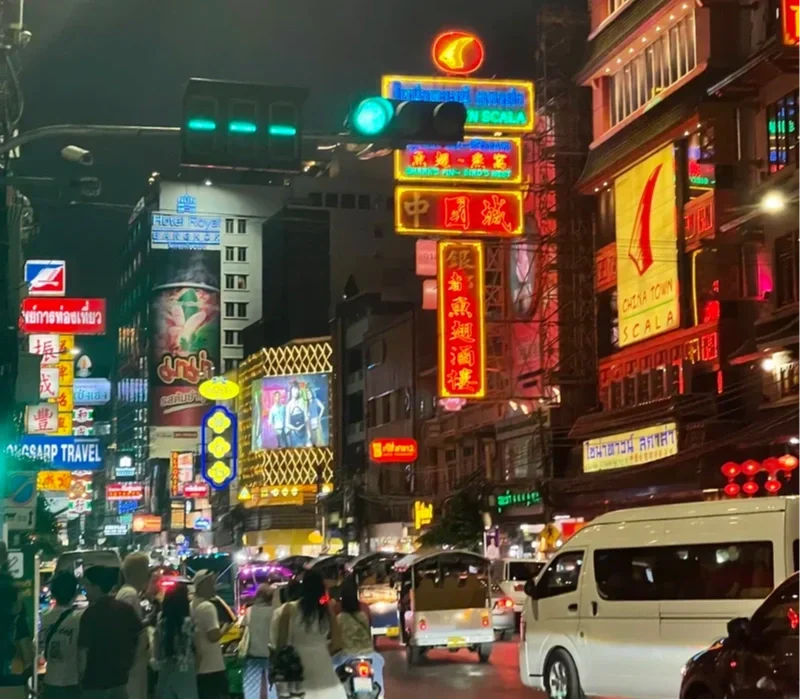
1. Explore Yaowarat Road
(Especially at Night)
After sunset, Yaowarat becomes a glowing corridor of neon signs, street vendors, seafood stalls, and crowds. This is when Chinatown feels most alive. Expect: Busy sidewalks. Outdoor seating. Long queues at popular food stalls. If you want energy and atmosphere, come after 6 PM.
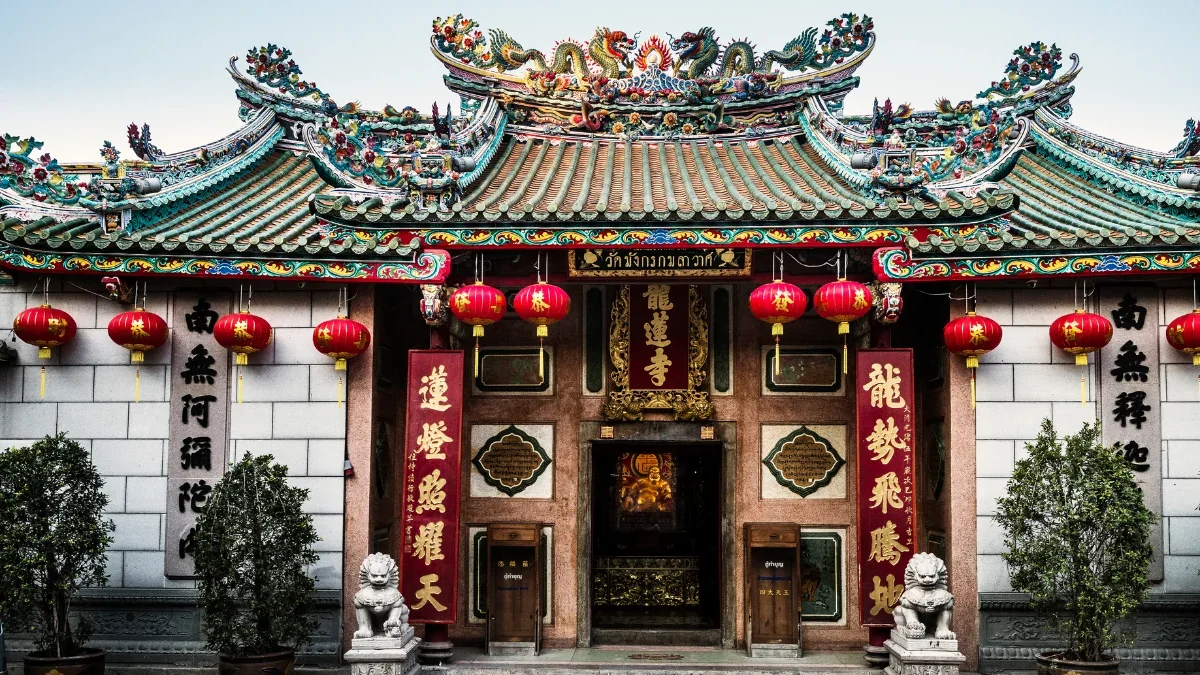
2. Visit Wat Mangkon Kamalawat
The largest Chinese Buddhist temple in Bangkok. Incense smoke, red lanterns, and traditional architecture make this one of the most photogenic spots in the area. It’s especially busy during Chinese New Year. Location >
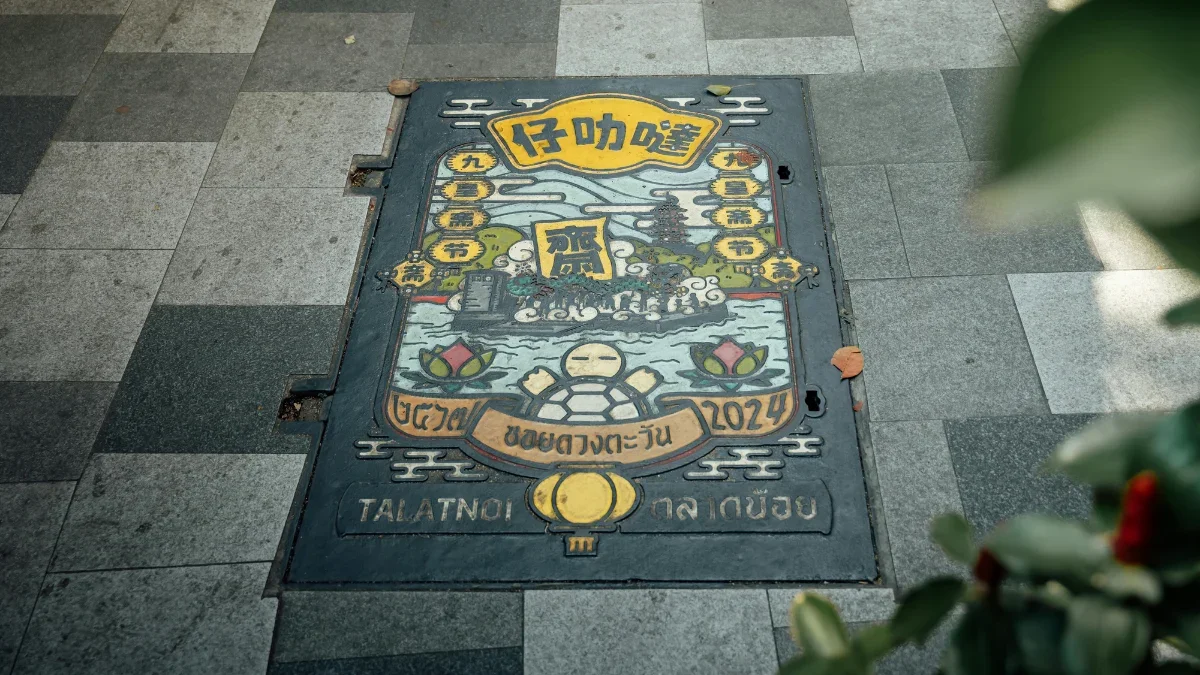
3. Discover Talat Noi
(Hidden Gem Area)
Just a short walk from Yaowarat, Talat Noi offers: Street art. Historic shophouses. Coffee shops. Quiet river views
It’s calmer than Yaowarat and perfect for morning exploration.
Location >
4. Explore Sampeng Market
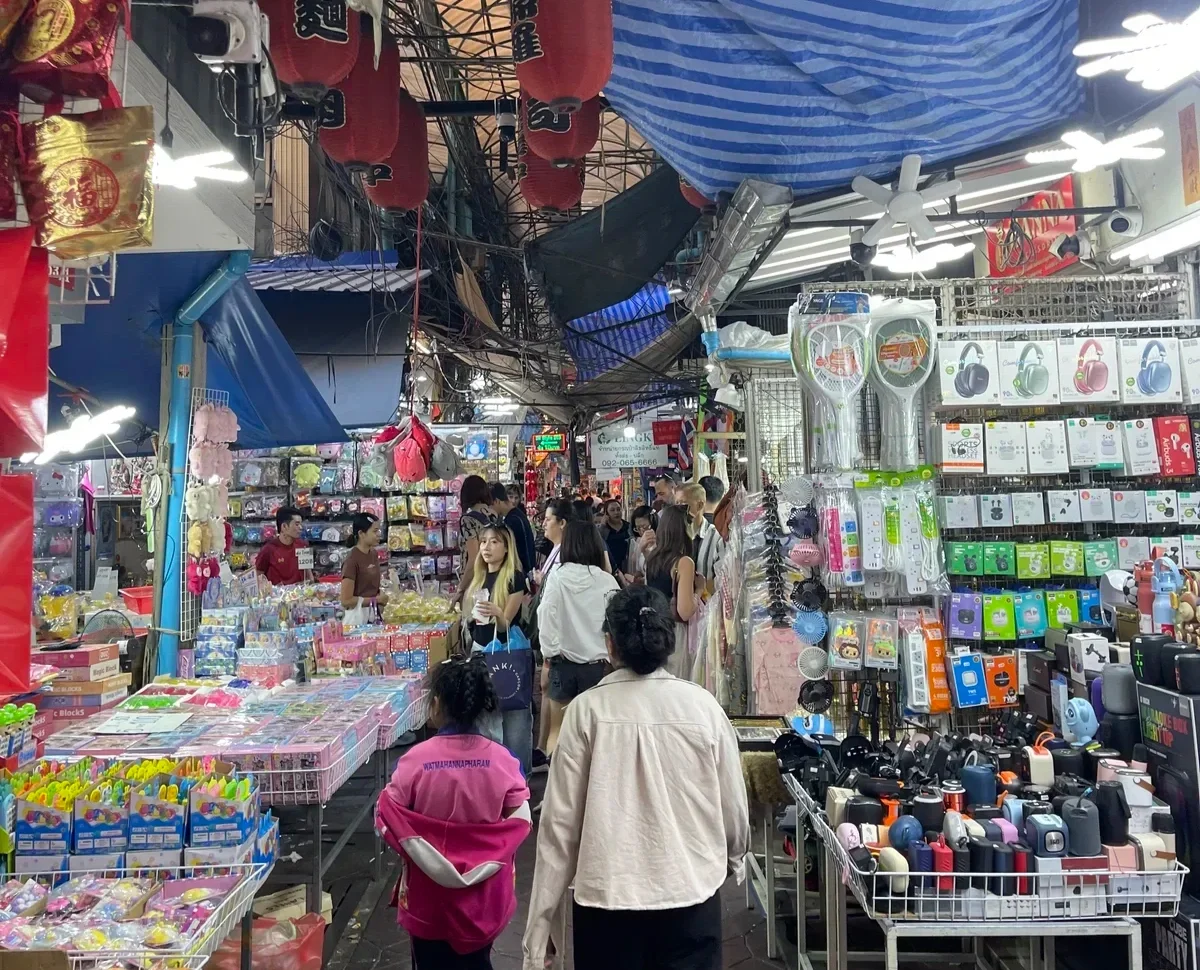
Sampheng Market is a narrow wholesale maze of textiles, accessories, fabrics, and street goods. Expect tight alleys, constant movement, and local trade energy. It’s less curated than Chatuchak, and far more authentic. Location >
Bangkok Chinatown Food Tour (Top-Rated Experience)
If you’d rather explore Chinatown with a local guide — and taste more than you could ever find on your own — this top-rated walking food tour is one of the best options in Bangkok. You’ll visit hidden street stalls, learn about Chinese-Thai heritage, and try 10+ authentic dishes while navigating Yaowarat with an expert. ✔ 4.9 rating. ✔ 800+ reviews. ✔ Free cancellation.
Where Exactly Is Chinatown?
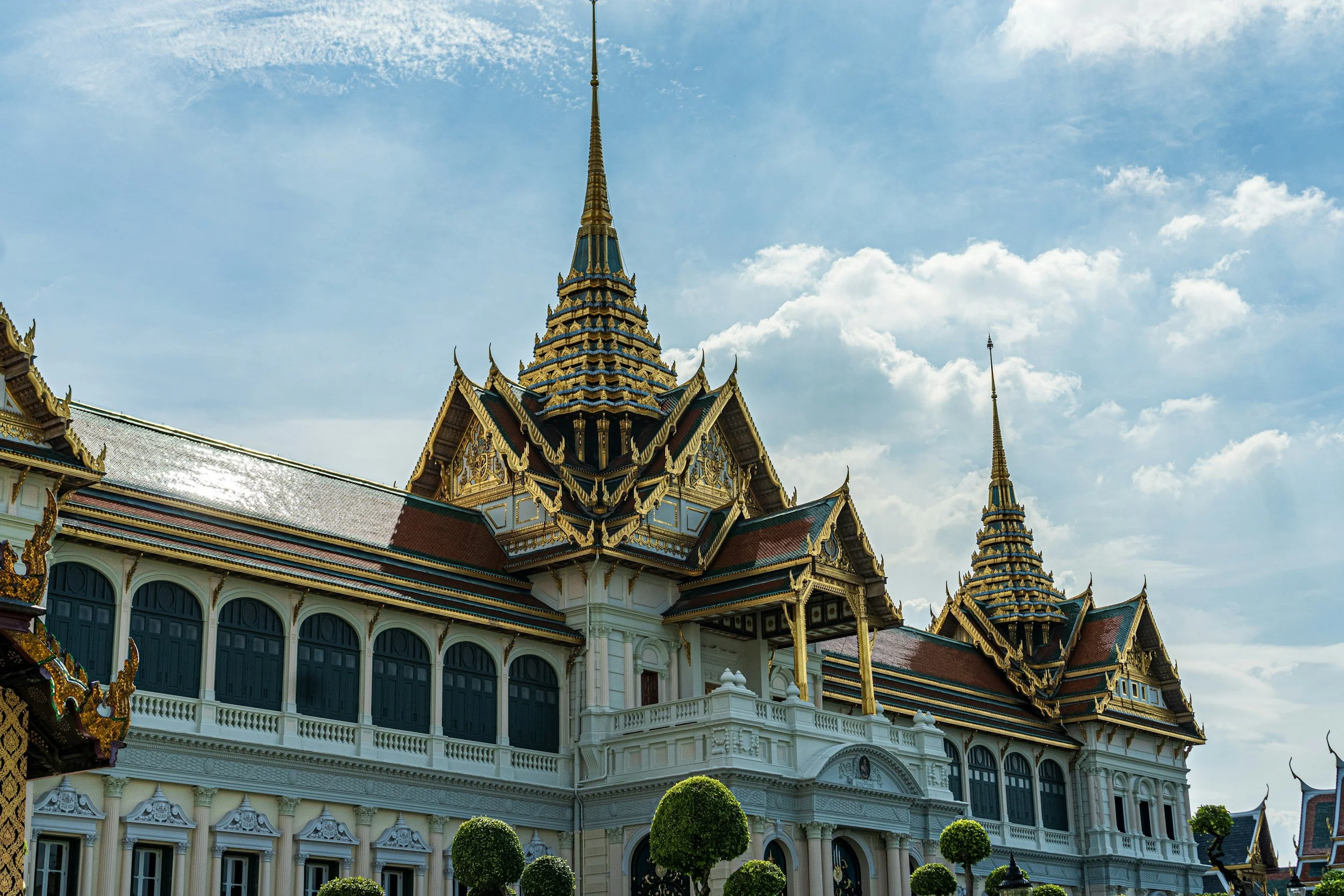
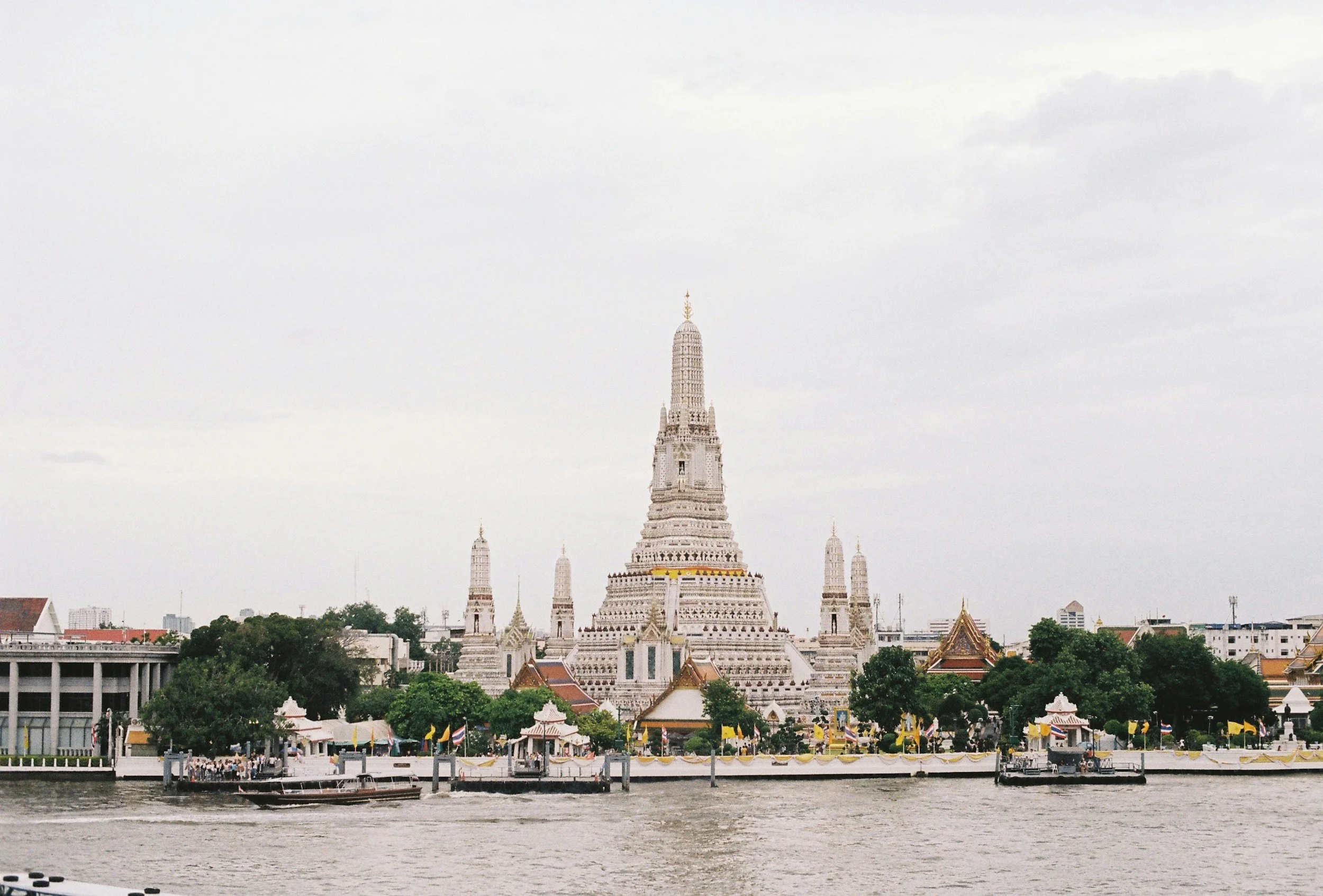
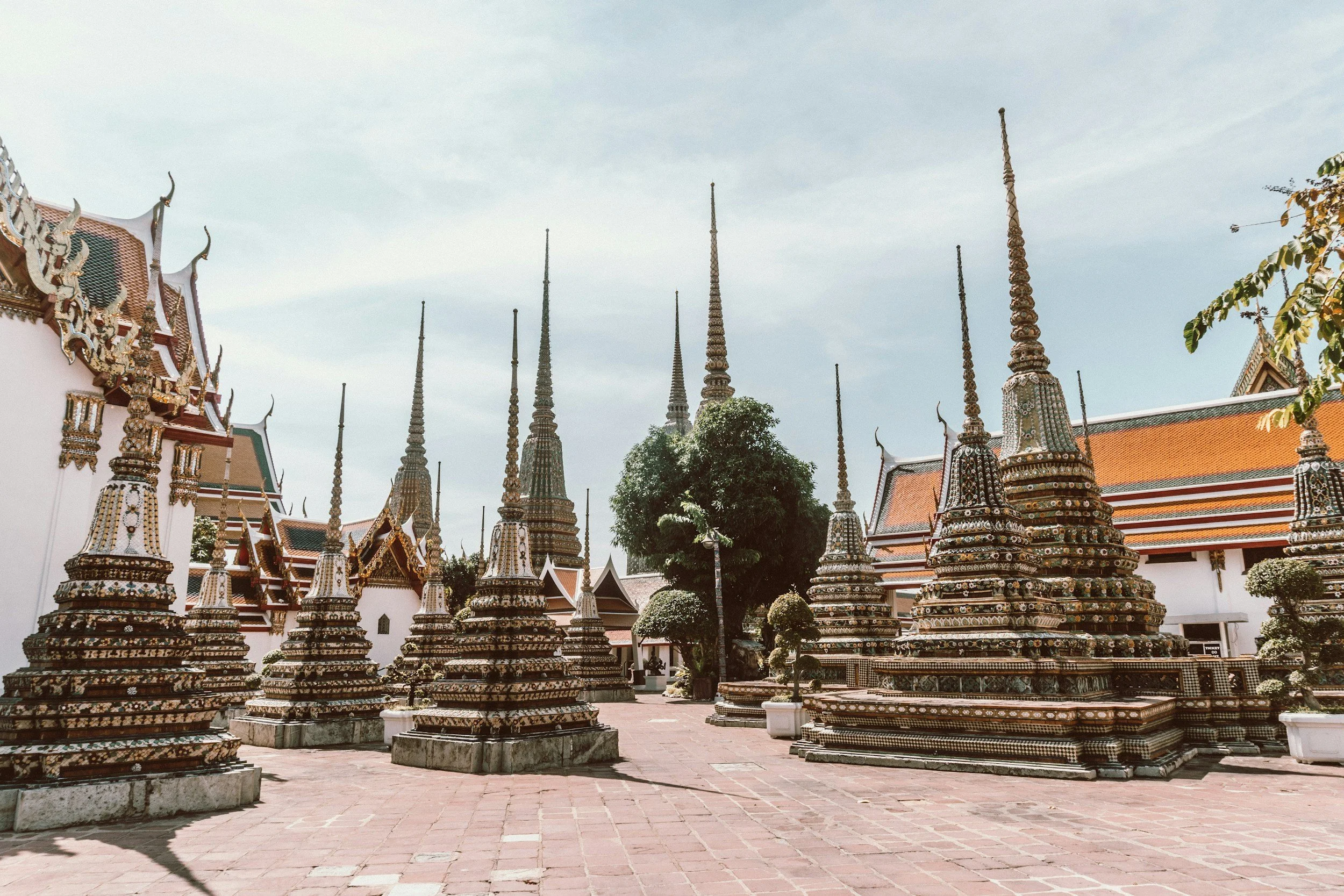
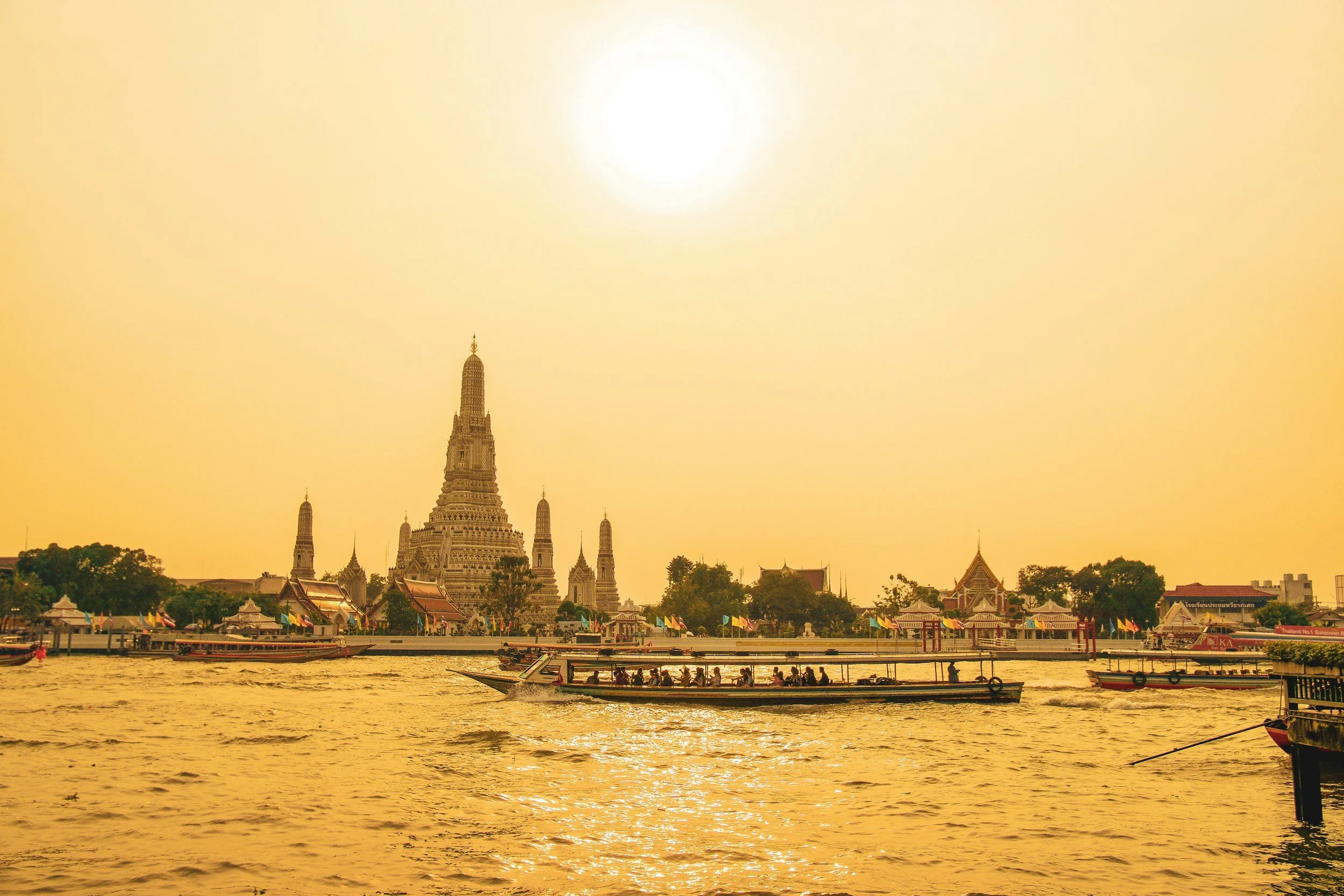
Chinatown centers around Yaowarat Road >, near: MRT Wat Mangkon Station >, Chao Phraya River, Old Town (Rattanakosin). It’s easy to combine with: The Grand Palace, Wat Pho, Wat Arun, Talat Noi
Best Time to Visit Chinatown: Evening (6 PM – 10 PM).
Best for street food and atmosphere. Morning (9 AM – 11 AM). Best for temples and Talat Noi photography. Avoid: Midday heat. Peak Chinese New Year crowds unless you enjoy festivals
How to Get to Chinatown.
Best option: MRT to Wat Mangkon Station > (most convenient). Alternative: River boat to Ratchawong Pier. Taxi or Grab (traffic can be heavy at night). Chinatown streets are narrow, walking is the best way to explore.
How Long Do You Need?
Plan: 2–3 hours for food + wandering. Half-day if combining with Talat Noi. Chinatown is about atmosphere, not checklist sightseeing.
Is Bangkok Chinatown Worth Visiting?
Yes, especially if: You love street food. You enjoy high-energy neighborhoods. You want a cultural contrast to temple visits. Chinatown feels different from modern Sukhumvit or riverside Bangkok. It’s louder, older, and more chaotic in a good way.
How to Combine Chinatown:
Perfect afternoon-evening route: Grand Palace (morning). Wat Pho. Ferry to Wat Arun. Late afternoon rest. Chinatown dinner. Or: Talat Noi (morning).Coffee. Sampeng Market. Lunch in Yaowarat
FAQ – Bangkok Chinatown
-
Yes. It’s busy and well-lit. Just watch belongings.
-
Yes for food and culture, but sidewalks are crowded.
-
Yes, but it’s calmer and more commercial. Night is more atmospheric.
-
No. Most operate first-come, first-served.
-
Food is generally affordable, though seafood restaurants can be pricier.
-
Yes, especially in the evening for the full experience.
-
Night offers best food and atmosphere; day is quieter and better for photography.
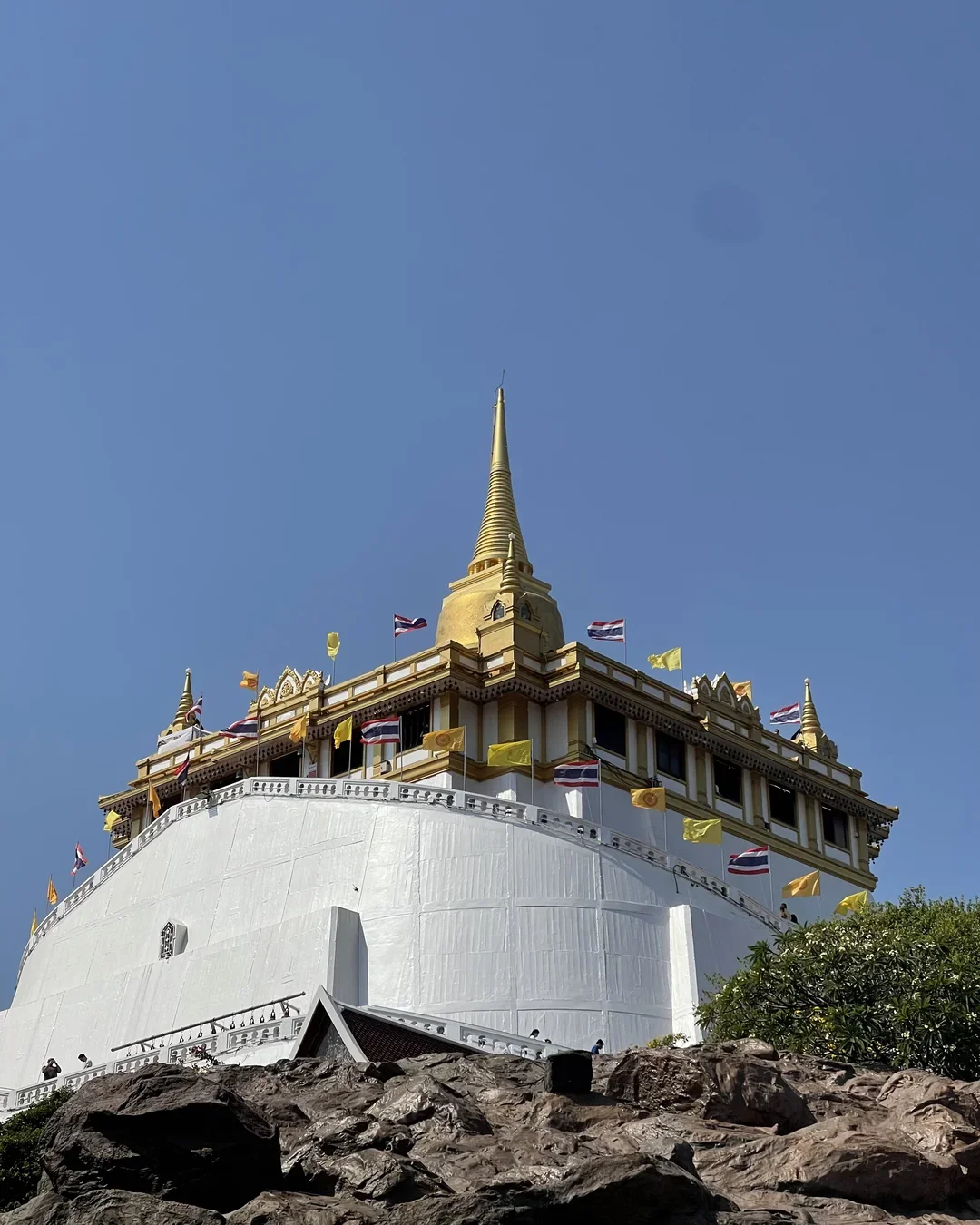
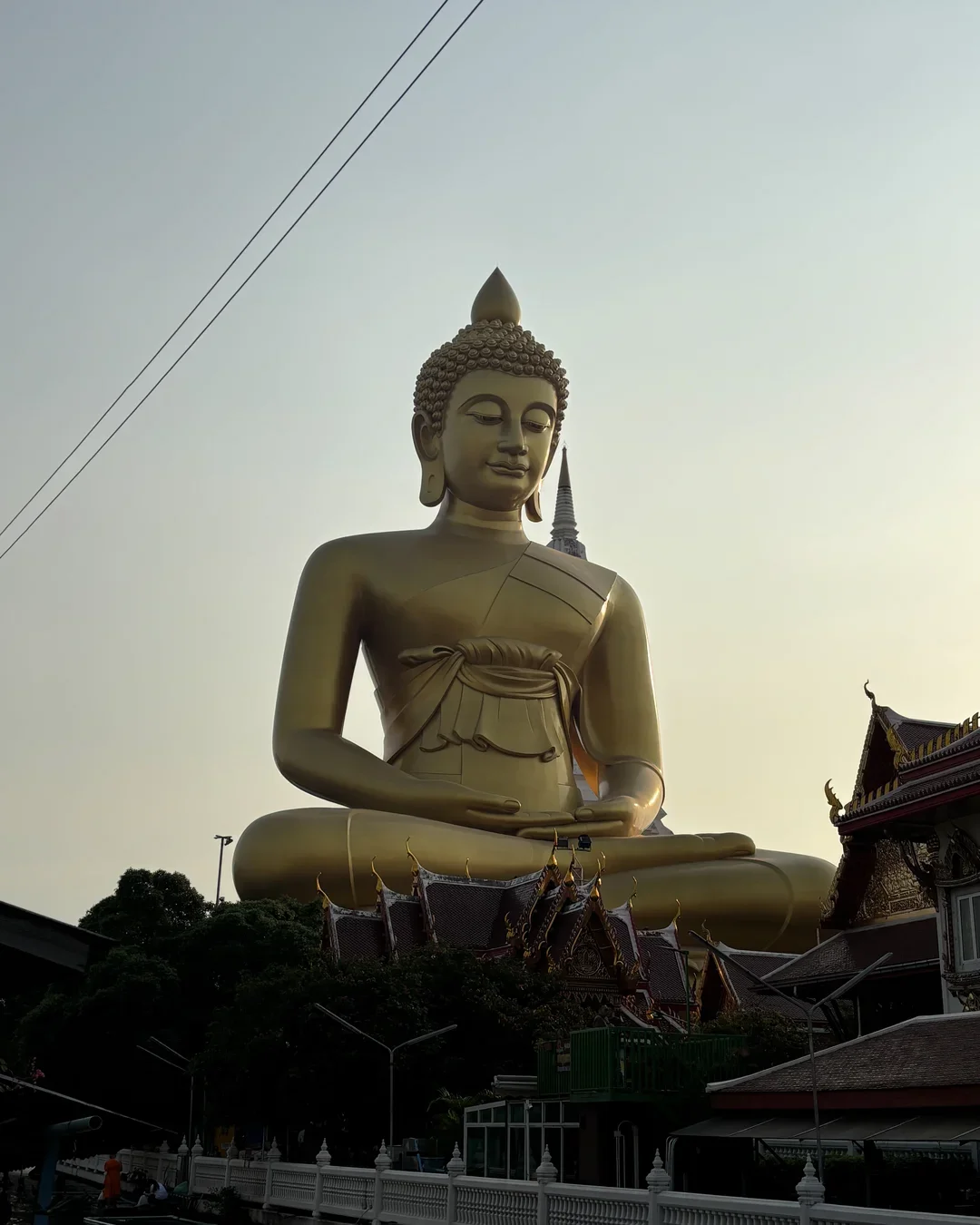
More Places to Visit in Bangkok
Plan Your Trip to
Bangkok With Minerave Travel
Plan your Bangkok trip effortlessly using Minerave Travel.
🟣 Compare hotels, flights, experiences, and essential travel services in one place >

Bangkok Cheat Sheet: Everything in One Place
Planning Bangkok can feel overwhelming transport systems, neighborhoods, airport transfers, scams, prices, and what actually makes sense for your trip style. Whether it’s your first visit or your fifth, this is the shortcut to navigating Bangkok with confidence.

